
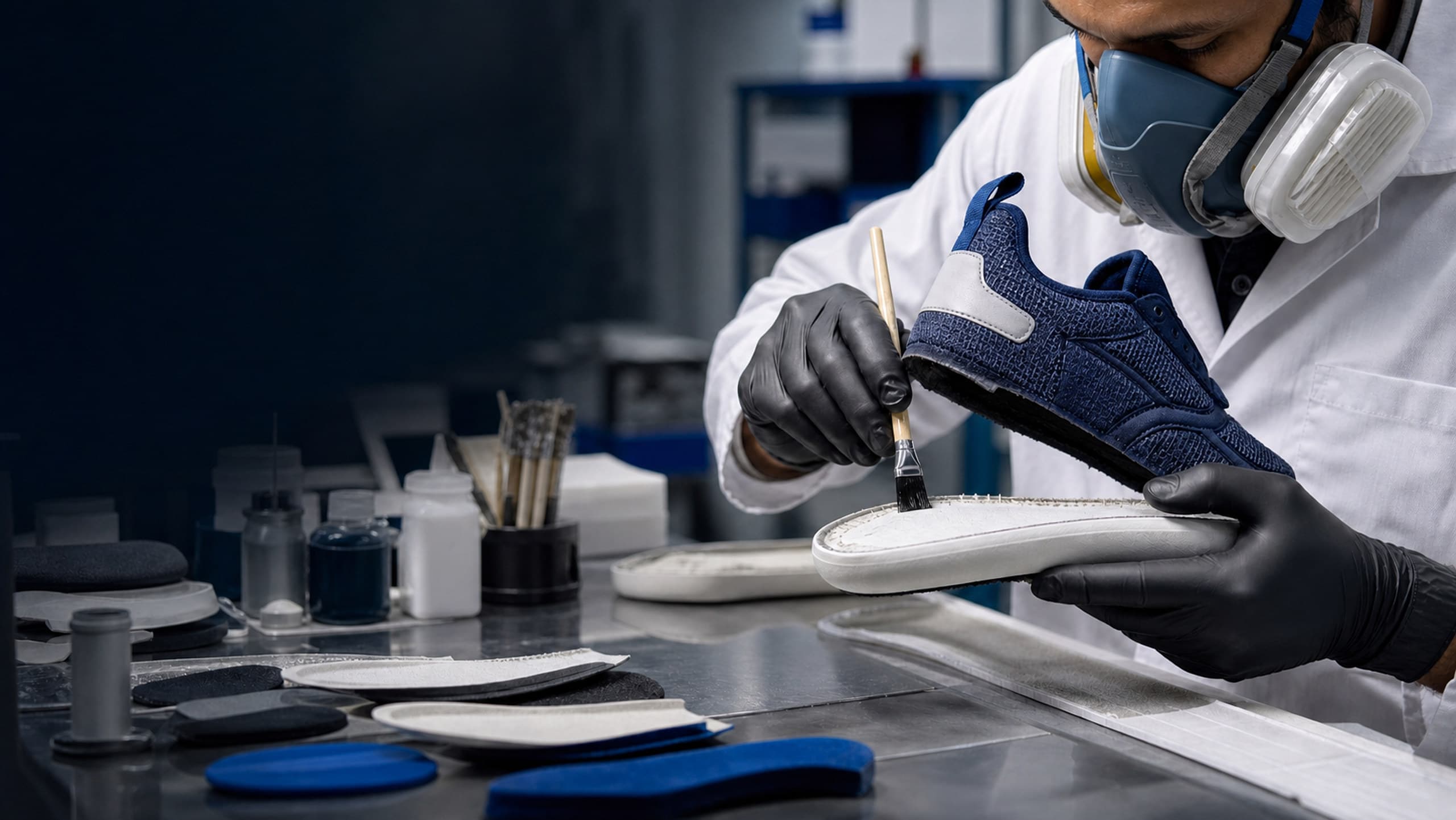
In short: Cold cement construction joins a prepared upper and outsole with an adhesive system, alignment and pressing. It is widely used for sport, casual, kids' and lifestyle shoes because it works with many materials and shoe types.
However, “cold cement” is not a quality grade. The final result depends on the product design, surface preparation, adhesive compatibility, application control, pressing, curing, workmanship and inspection criteria.
Which footwear categories can use it?
Cold cement construction is common in sneakers, training shoes, casual shoes, kids' shoes and light outdoor shoes with stitched uppers and separate outsoles. The final choice depends on the design, intended use and required tests.
Typical development and production flow
1. Product Requirements
The buyer and development team align the category, target customer, reference style, expected materials, quantity and price position. This is the point to identify whether existing components are suitable or new development is required.
2. Pattern & Components
Patterns, upper materials, reinforcements, lining and outsole requirements are prepared for sampling. Material compatibility and availability should be reviewed before treating the design as production-ready.
3. Cutting & Stitching
Cut components are stitched into the upper, which is then shaped around the selected last. Fit requirements, symmetry and construction details need to match the approved reference.
4. Lasting & Cementing
Bonding surfaces are prepared according to the material and adhesive system. Adhesive application, activation where required, alignment and pressing all influence bond consistency.
5. Final Inspection
The assembled footwear requires the appropriate process time before final finishing and inspection. Visual checks alone may not replace agreed physical testing when bond performance is a critical requirement.
What should buyers check before sampling?
- Whether the proposed upper and outsole materials are compatible with the construction.
- Whether the outsole is existing, modified or requires new tooling.
- Which colorways and size range are included in the MOQ discussion.
- Which logo techniques, labels and packaging elements are required.
- Which market tests or buyer inspection standards must be planned.
- Who approves the sample and which document becomes the production reference.
Frequently asked questions
Which shoes commonly use cold cement construction?
It is commonly considered for many sport, casual, kids, outdoor and lifestyle footwear programs, depending on design and performance requirements.
Does cold cement automatically mean higher quality?
No. Quality depends on design, materials, preparation, adhesive system, process control, curing and inspection.
What information should I send for a quotation?
Send category, target market, reference images or tech pack, materials, size range, colorways, quantity, logo and packaging requirements, test expectations and timeline.