
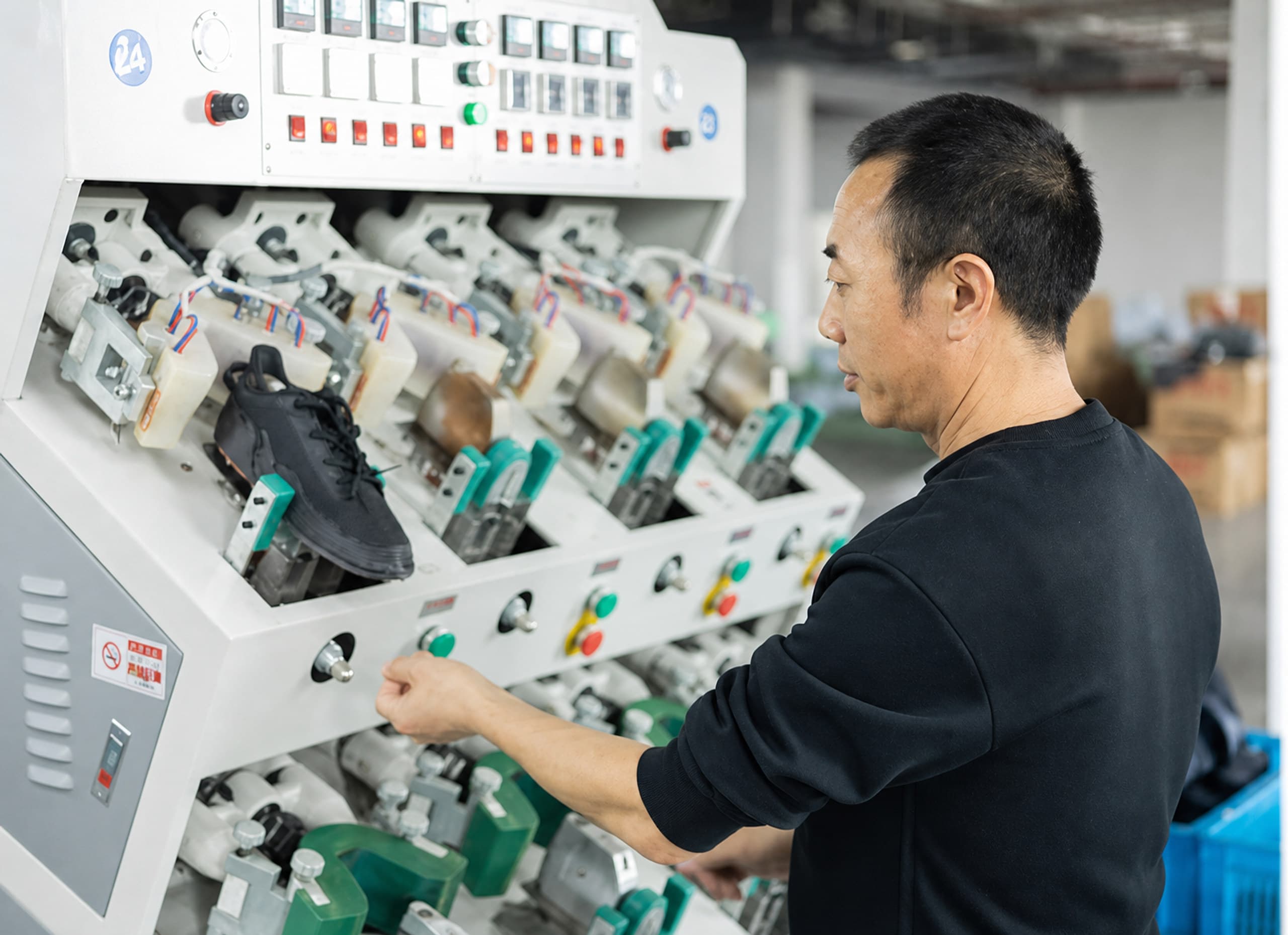
In short: OEM footwear quality should be managed against the buyer-approved sample, written order specification and packaging requirements. Inspection is not only a final search for defects; it records deviations and decisions from material confirmation through production and shipment approval.
Before production
- Confirm the sample, specification, color standard, materials and components.
- Define sizes, assortment, logos, labels and packaging.
- Agree required market tests, sampling approach and responsible parties.
During production
Review selected cutting, stitching, assembly, bonding and appearance checkpoints. When a deviation is found, record photos, quantity, affected scope and corrective result instead of relying only on verbal updates.
Final inspection
| Area | Main checks |
|---|---|
| Appearance | Color, shape, cleanliness and symmetry |
| Workmanship | Stitching, bonding, reinforcement and alignment |
| Order details | Model, size, quantity, logo and labels |
| Packaging | Shoebox, tissue, packing ratio and carton marks |
Shipment approval and records
The report should state the sampling scope, defect classification, findings and the shipment decision. Third-party inspection can be agreed before order confirmation, but it does not replace a clear product specification.
FAQ
Must every pair be inspected?
The level depends on the agreement. Appearance checks, measurement sampling and performance testing may use different plans.
Who is responsible for testing?
The laboratory, standard, sample quantity, cost and timing should be confirmed before production. See FANVENO quality management.